 Canada
 United States
 Bahamas
 Jamaica
 Trinidad & Tobago
 Antigua & Barbuda
 Barbados
 Anguilla
Bahamas NIB Compliance 2026: One Pay Run Gets It Wrong

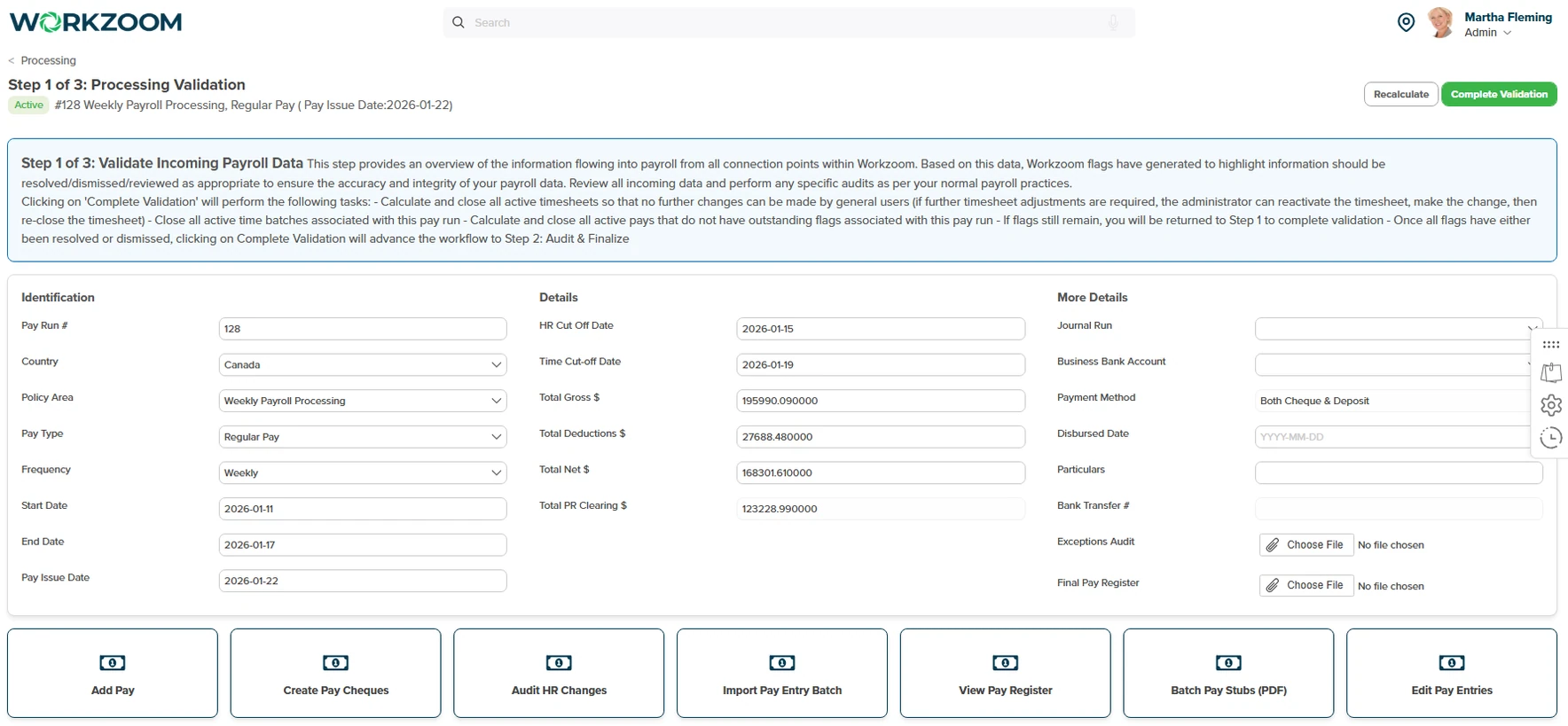
Most Bahamian employers don't find out their NIB contributions are wrong until an audit tells them. On the demos we run with Bahamian employers, the same setup surfaces again and again: compliance hangs on memory and luck. Employees submit paper forms. Finance manually calculates rates from printed tables. Someone cross-references salary changes across three different spreadsheets, and hopes the numbers line up.
Most Bahamas employers make critical errors with NIB contribution rates: using outdated rate tables, missing salary threshold updates, and applying incorrect employer vs. employee percentages. For 2026, employee contributions are 4.65% on earnings up to $830 weekly, while employer contributions are 6.65% on the same cap (rate schedule effective July 1, 2024). The ceiling has been $830 per week since July 1, 2026, up from $810 before that date.
- NIB employee rate: 4.65% on earnings up to $830/week ($43,160/year), up from $810/week ($42,120/year) before July 1, 2026
- NIB employer rate: 6.65% on earnings up to $830/week ($43,160/year), up from $810/week ($42,120/year) before July 1, 2026
- Common errors: outdated tables, wrong thresholds, manual calculation mistakes
- Modern payroll systems auto-update rates and handle backdated corrections
Bahamas NIB Compliance in 2026: The Rate Structure
Most employers miss the same thing about Bahamas NIB compliance in 2026. The rates themselves are straightforward:
- Employee contribution: 4.65% of weekly earnings up to $830 (up from $810 before July 1, 2026)
- Employer contribution: 6.65% of weekly earnings up to $830 (up from $810 before July 1, 2026)
- Annual cap: $43,160 per employee since July 1, 2026 (previously $42,120)
The devil lives in the execution.
Cable Bahamas processes payroll for 850 employees across multiple companies. Before switching to an integrated system, their payroll team spent hours cross-referencing NIB rates against salary changes. The manual process created a bottleneck that stretched payroll from 1.5 days to 5 days.
When that flag comes up it gives us a proactive approach and allows us to spot and correct errors before we even run payroll.
Shanika Pinder, Compensation & Payroll Supervisor and HR Business Partner, Cable Bahamas
Where Most Employers Go Wrong
Three mistakes show up repeatedly in Bahamas payroll audits, and they match the pattern we see across our Bahamian payroll base when a company moves off spreadsheets:
Using Outdated Rate Tables
NIB rates change. Employers print rate cards and use them long after the schedule has moved. The most recent schedule change took effect July 1, 2024, lifting employer contributions to 6.65% and employee contributions to 4.65%.1 Salary adjustments, bonuses, and promotions happen throughout the year. A printed card doesn't account for an employee who crosses the $830 weekly threshold mid-year, and it won't account for the fact that the ceiling has been $830 (up from $810) since July 1, 2026 either.2
Missing the Weekly vs. Annual Calculation
The $830 cap is weekly, not monthly. An employee earning $3,400 monthly hits the weekly cap some weeks but not others, depending on pay frequency and timing. Manual calculations miss this nuance.
Most companies calculate monthly. Wrong.
Mixing Up Employer vs. Employee Rates
The 4.65% employee rate and 6.65% employer rate get reversed in spreadsheets. It happens more often than anyone admits. The result? Incorrect deductions and compliance gaps that surface during audits.
Tired of manual NIB calculations?
Workzoom keeps NIB rates current and calculates Bahamas contributions automatically, so the rates update in real-time, contributions calculate correctly, and backdated changes flow through without re-entry. Starting at $4/employee/month per suite.
See how Workzoom handles NIB calculationsHow Payroll Architecture Affects NIB Compliance
The difference between compliant and non-compliant NIB processing often comes down to system architecture. Not policy. Not training. System design.
That's not a discipline problem. That's a design problem. A payroll team that recalculates rates by hand will miss a threshold eventually, no matter how careful they are, because the work depends on a person remembering every salary change.
Date-Effective Processing
When an employee gets a salary increase effective March 15th, that change affects NIB calculations for every pay period from March 15th forward. It might also affect previous pay periods if the increase is retroactive.
Date-effective payroll systems handle this automatically. They recalculate NIB contributions based on the effective date of the change. The correction flows into the next payroll run without manual intervention.
Spreadsheet-based systems can't do this. Someone has to remember the change, calculate the impact, and manually adjust multiple pay periods. The chances of getting it right drop with every manual step.
Single Database Architecture
When HR updates an employee's salary in a single-database system, payroll sees the change immediately. NIB calculations update automatically. No handoff. No re-entry. No forgetting to update the payroll spreadsheet.
Multi-system environments break this connection. HR updates the employee record in one system. Payroll runs calculations in another system. The NIB rate correction requires manual coordination between departments.
The manual sheet that goes back and forth between HR and payroll, we used to do it. 3 people deal with close to 1,000 people. It's been seamless.
Shanika Pinder, Compensation & Payroll Supervisor and HR Business Partner, Cable Bahamas
The Cost of Getting NIB Wrong
NIB audits happen. The National Insurance Board reviews employer contributions and identifies discrepancies. Keep contribution records and affected pay-period detail available for a correction. Under section 55(1) of the Bahamas National Insurance Act, unless regulations otherwise provide, sums due to the Fund by way of contribution bear interest compounded annually at the prime rate per annum or another prescribed rate from a prescribed date. Confirm any assessment, enforcement action, or payment arrangement with NIB.
Island Luck, a major gaming operator in the Bahamas, processes payroll for hundreds of employees across multiple locations. Before implementing an integrated payroll system, they dealt with manual NIB calculations, inconsistent records, and the constant worry of compliance gaps.
The real cost is not a stated fixed penalty. It's the time spent on manual processes, the stress of potential audits, and the opportunity cost of payroll teams focused on compliance instead of strategic work.
What Modern NIB Compliance Looks Like
Compliant NIB processing in 2026 should be invisible. The system should:
- Update contribution rates automatically when NIB publishes changes
- Handle weekly, bi-weekly, and monthly pay frequencies correctly
- Calculate contributions based on actual pay dates, not calendar months
- Process retroactive salary changes without manual intervention
- Generate NIB reports in the required format
The payroll manager shouldn't think about NIB rates. The system should handle compliance automatically while they focus on exceptions and strategic planning.
Managers can access updated payroll information in real time, which minimizes any discrepancies and avoids the use of outdated data.
Shanika Pinder, Compensation & Payroll Supervisor and HR Business Partner, Cable Bahamas
Implementation Reality
Moving from manual NIB processing to automated compliance takes planning. The transition typically involves:
Data cleanup: Validating current NIB records against employee files. Manual systems often have gaps.
Process documentation: Understanding current workflows before changing them. What manual steps can be eliminated? Which ones need to remain?
Testing phase: Running parallel calculations for at least two pay periods. Manual calculations in the old system, automated calculations in the new system. Compare results.
The goal isn't perfection on day one. The goal is confidence that the new system produces accurate results consistently.
Beyond Basic Compliance
NIB compliance extends beyond contribution calculations. Modern payroll systems also handle:
- Employee self-service: Workers can access their NIB contribution history online
- Audit trails: Complete record of who changed what and when
- Reporting automation: Monthly and annual NIB filings generated automatically
- Multi-company processing: Separate NIB tracking for employees who work across multiple entities
Cable Bahamas runs payroll for multiple companies under one corporate umbrella. Each entity has separate NIB obligations. The payroll system tracks contributions by company automatically, eliminating manual allocation and reducing compliance risk.
Where the Official Rules Come From
NIB is a statutory scheme administered under the National Insurance Act. The Bahamas Government portal publishes the National Insurance Board's mandate and the legislative framework governing employer obligations. The NIB website (nib-bahamas.com) publishes the current rate schedule, contribution ceiling, and C10 filing requirements directly. Treat the official published schedule as the authoritative source; this post reflects rates confirmed as of early 2026.
Workzoom calculates and prepares NIB contribution data for each pay run. The employer submits contributions to NIB. That distinction matters: the platform handles the arithmetic and generates the contribution schedule, but the filing obligation rests with the employer.
The Payroll Architecture Behind Clean NIB Compliance
NIB compliance at scale is an architecture problem, not a training problem. The reason Cable Bahamas cut payroll from 5 days to 1.5 days with 3 staff handling close to 1,000 people is not that they found better spreadsheets. It's that effective dating, a single employee record, and policy-driven contribution rules removed the manual handoffs that created errors.
Effective dating means a salary change entered on March 15 recalculates NIB forward from that date automatically. The policy engine applies the correct ceiling, splits the 6.65% and 4.65% shares, and flags any retroactive period. Nothing requires a separate manual correction run. The full Bahamas payroll and NIB compliance guide walks through how those rules sit inside a single pay run.
Island Luck runs 8 payrolls per week across 60+ locations in the Bahamas. Facial-recognition clocks feed hours into the same system that calculates NIB. That's not a trivial compliance operation. It works because the architecture is connected across the system, not because 8 separate spreadsheets stay synchronized.
If you've been catching NIB errors by hand and bracing for the next audit, you're not the problem. The process is. A team built to remember every threshold and rate change is a team set up to miss one, and the fix isn't trying harder. It's letting the system carry the rules.
That's the difference between spreadsheet payroll and system payroll. Spreadsheets track what happened. Systems prevent problems before they occur.
- NIB contribution rates, employee 4.65% and employer 6.65% (11.3% combined), in force since July 1, 2024, up from the prior 3.9% and 5.9%: National Insurance Board of The Bahamas, Contributions, with the rate increase corroborated by The Nassau Guardian.
- Insurable wage ceiling increased from $810 to $830 per week (monthly $3,510 to $3,597), effective July 1, 2026: National Insurance Board of The Bahamas.
- Under section 55(1) of the Bahamas National Insurance Act, unless regulations otherwise provide, sums due to the Fund by way of contribution bear interest compounded annually at the prime rate per annum or another prescribed rate from a prescribed date. National Insurance Act. Confirm any assessment with NIB. Rates and ceilings should be verified against the current NIB schedule before each pay year.
- National Insurance Act, Ch. 350, ss. 54-55 claim checked Sep 9, 2026
See Workzoom in 30 minutes.
Real product, real questions, no slides. Starts at $4 per employee per month, CAD or USD, with $0 setup fees.
What readers ask after this post on Bahamas NIB compliance 2026.
Our clients
The teams that run their people on Workzoom.













Workzoom handles HR, payroll, workforce, and talent on one employee record. Book a 30-minute walkthrough.