 Canada
 United States
 Bahamas
 Jamaica
 Trinidad & Tobago
 Antigua & Barbuda
 Barbados
 Anguilla
Multi-Country Caribbean Payroll: One Platform vs Three Vendors

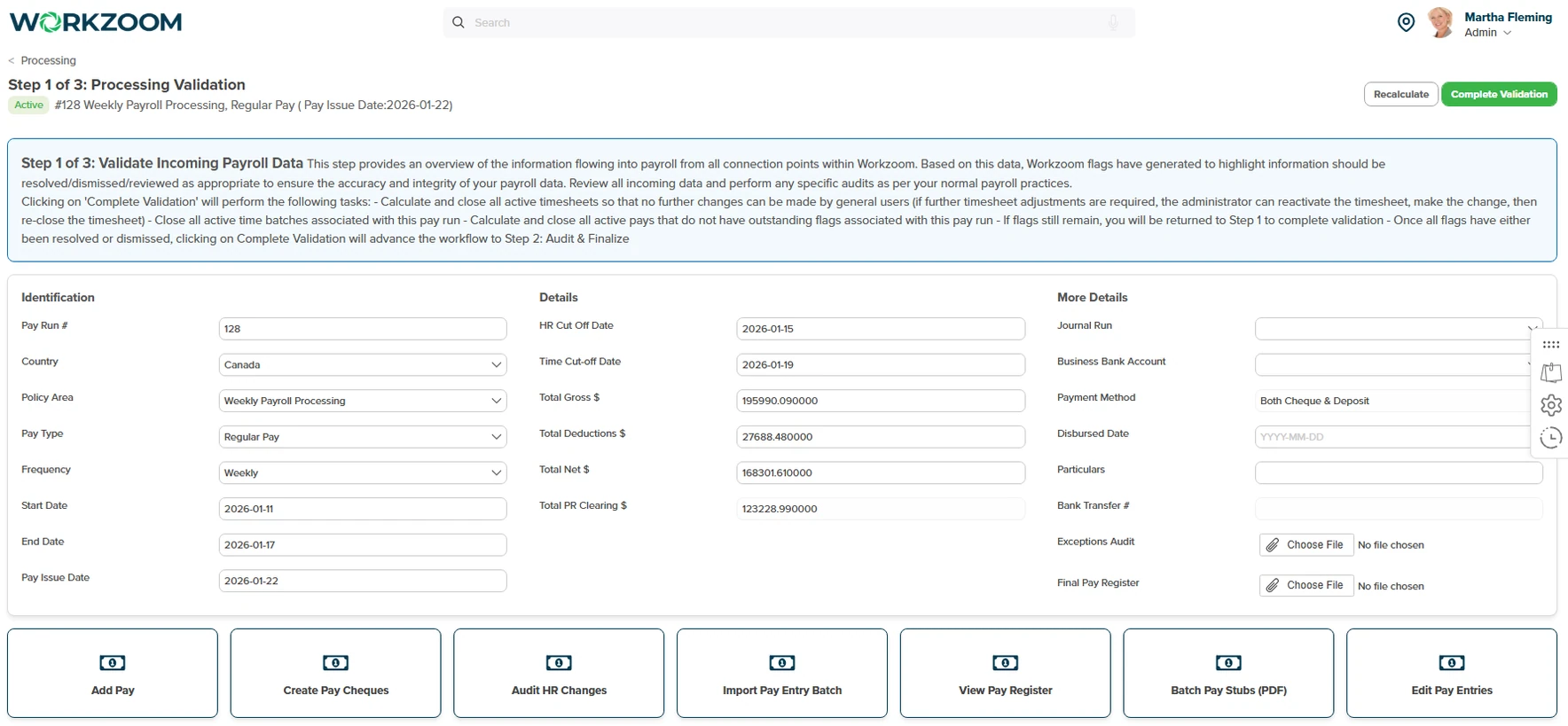
A regional operator we sat with last quarter told us how three Caribbean countries turn into one payroll headache. Bahamas headquarters, Jamaica office, Trinidad warehouse. Their payroll stack looks like this. Local provider in Nassau for the Bahamas team. A different local provider in Kingston for Jamaica. A spreadsheet plus a junior finance hire in Port of Spain for Trinidad. Every two weeks, someone exports three sets of pay data, reconciles in Excel, and re-keys totals into the corporate finance system in US dollars. Hours per pay period. Every single cycle.
Multi-country Caribbean payroll on three separate vendors costs more than the combined licence fees. The real cost is the reconciliation hours, the audit risk from three audit trails that never quite agree, and the manual cross-border conversion every payroll cycle. One platform with country-specific compliance built in changes the math, not just the workflow.
- Most Caribbean operators end up with one payroll vendor per country because vendors are built one country at a time
- The hidden cost is reconciliation hours per pay cycle, not the licence fee per vendor
- Country compliance does not generalize. NIB, NIS, NHT, PAYE, health surcharge each need country-specific calculation logic
- One-platform multi-country payroll consolidates the audit trail and the corporate reporting view without forcing one currency on the pay runs
- Cable Bahamas, Island Luck, AML Foods, and Sun Oil run their Bahamas payroll in Workzoom today. The payroll engine is capable of handling Jamaica, Trinidad and Tobago, and Barbados; contact us about payroll for those countries and your timelines.
Here's what's going on. Caribbean payroll software is mostly built one country at a time. The Bahamas-only vendors do NIB and stop at the border. The Jamaican vendors do NIS plus NHT and stop at the border. A regional operator either picks a US-built HRIS that does not handle local statutory codes correctly, or stitches together three local vendors and pays the integration cost in human hours. That's not a feature problem. That's an architecture problem.
The Three-Vendor Trap
Three vendors looks reasonable on a procurement scorecard. Each one knows its own market. Local support. Compliant filings. Reasonable monthly cost per country.
Then the operations work begins.
- Each vendor uses its own pay-period calendar. Bahamas runs weekly, Jamaica runs fortnightly, Trinidad runs monthly. The corporate finance close has to wait for the slowest one.
- Each vendor exports a different file format. Someone in finance manually unifies them into a consolidated view.
- Headcount reporting requires logging into three systems, exporting three lists, deduplicating the cross-border employees, then sending the result to the holding company in US dollars.
- An audit request that asks "show every active employee across the group as of March 1st" takes a week to compile and never quite matches across the three audit trails.
- Salary changes for a cross-border transfer require closing the employee in System A, opening them in System B, and remembering not to double-count them in corporate reporting.
None of that work shows up in the per-employee licence line. It shows up in the time of the regional CFO, the group HR director, and the junior accountant who quietly rebuilds the consolidation spreadsheet every month.
The pattern we see across our Bahamas implementations is consistent: a single-country payroll setup holds until the group crosses its first border, and then the reconciliation never stops.
That's not a cost-savings problem. That's a multiplier problem. The HR and finance team is doing data engineering instead of running the business. You shouldn't have to reconcile three payroll systems by hand every cycle to answer one headcount question.
What Multi-Country Means
"Multi-country payroll" is a phrase a lot of US-built HRIS vendors use. Most of them mean: we have a translation of our US form 941 logic, plus a configurable tax engine you can tune yourself. That is not the same thing as running local Caribbean payroll.
Real multi-country Caribbean payroll has four properties built in:
- Country-specific compliance, not configurable templates. The Bahamas NIB cap of $830 per week (effective July 1, 2026) is hard-coded. So are Jamaica NIS, NHT, education tax, and PAYE thresholds. So are Trinidad and Tobago NIS, health surcharge, PAYE, and green fund levy. The customer does not configure those. The vendor maintains them.
- Local currency on the pay run, consolidated currency on the report. Pay runs use BSD, JMD, TTD, BBD in their own jurisdictions. Group reporting rolls up to USD or CAD at corporate level.
- One employee record across the group. An employee who transfers from the Bahamas office to the Trinidad office stays one person in the database. The pay calculation switches countries on the effective date of the transfer. No manual record duplication.
- One audit trail per employee across all jurisdictions. Every change date-stamped, every approver named, every calculation auditable in one log.
That is the actual difference between "we technically support multiple countries" and "we run multi-country payroll." Most vendors talk about the first. The second is rare.
Local Compliance Does Not Generalize
The reason there is no obvious one-vendor answer in this space is that local compliance is genuinely specific. A short tour:
- Bahamas. National Insurance Board (NIB). Employer 6.65%, employee 4.65%, weekly insurable wage ceiling $810 through June 30, 2026, then $830. C10 filing due the 15th of the following month. If a payment is overdue, confirm the assessed balance and applicable interest directly with NIB. Reference: National Insurance Board of the Bahamas.
- Jamaica. NIS, NHT, education tax, HEART contributions, PAYE. Each has its own ceiling and rate. Filing through TAJ.
- Trinidad and Tobago. NIS contributions, health surcharge (flat weekly amount), PAYE, green fund levy on corporate gross. Filing through BIR.
- Barbados. NIS, PAYE, severance pay scheme contributions. Filing through Barbados Revenue Authority.
- Antigua and Barbuda. Medical Benefits Scheme plus Social Security contributions. Different ceiling, different cadence.
A US-built HRIS that promises "global payroll" usually handles none of these correctly. The customer ends up configuring tax tables, maintaining ceiling updates, and discovering errors after the audit. That's not multi-country. That's the customer doing the vendor's compliance work.
One Audit Trail Changes the Group Audit
The reconciliation problem looks small until an external audit lands.
A holding company audit asks: show the headcount, total payroll spend, statutory contributions, and effective date history across the group as of a specific quarter. Three-vendor operators spend a week assembling that. One-platform operators run a single report.
The real value of the consolidated audit trail is not the time saved on the report. It is the auditor's confidence in the data. Three audit trails that never quite match each other produce a finding even when nothing is wrong. One audit trail across entities produces a clean opinion.
Multi-country Caribbean payroll, one platform.
$4 to $16 per employee per month, no setup fees, month-to-month. Bahamas payroll live today with Cable Bahamas, Island Luck, AML Foods, Sun Oil. The payroll engine is capable of handling Jamaica, Trinidad and Tobago, and Barbados. Tell us your country mix and headcount and we will tell you honestly what is live and what needs a conversation about timelines.
Tell Us What You Need to SeeWhat Runs on Workzoom Today (the Honest Version)
Honesty matters more than scope creep. Here is the actual state of Caribbean payroll on Workzoom as of mid-2026:
- Bahamas: Payroll fully live. Named clients include Cable Bahamas (three legal entities, 850 employees, telecom), Island Luck (60+ locations, 850 employees, gaming), AML Foods (900 employees, retail), Sun Oil (525 employees, fuel distribution), Nassau Airport Development (275 employees, aviation), and Grand Isle Resort.
- Jamaica, Trinidad and Tobago, Barbados: HR, Workforce, and Talent are fully live. The payroll engine is capable of handling these three countries' statutory stacks; current scope covers earnings-to-gross calculation (0-to-gross), with full gross-to-net being built against real payroll cycles. If payroll is part of your evaluation, mention it at your walkthrough. We will tell you honestly whether the timing is right.
- Antigua and Barbuda: HR, Workforce, and Talent live. Payroll not yet on the roadmap for general availability.
This list will move. Payroll for the other countries rolls out over time, specifically so the compliance engine in Jamaica, Trinidad and Tobago, and Barbados is built against real payroll cycles, not synthetic test data. That is the right way to build a country payroll engine. It is also why the timeline is honest instead of marketing.
If your group spans Bahamas plus any combination of Jamaica, Trinidad, or Barbados, the one-platform path is open today. Bahamas pay runs live, and the other three countries are HR + Workforce + Talent live today; the payroll engine is capable of handling their statutory stacks, so contact us about payroll for those countries and your timelines. The reconciliation hours go away before the payroll consolidation does.
What to Ask Any Caribbean Payroll Vendor
Five questions that filter the field quickly:
- Name the statutory codes you handle today in each Caribbean country, and the cap or ceiling for each.
- How do you handle a cross-border employee transfer mid-year without duplicating the employee record?
- Where is the consolidated headcount and total payroll report for the group? Show it live, not in a slide.
- What is your filing cadence per country? Who maintains the rate tables when the government changes them?
- If your roadmap shows a country as "coming," how does the rollout work over time and what are the named first-cohort clients?
Most vendors will fumble at least two. Vendors who answer all five with named entities and dates are the ones worth a walkthrough.
Where We Are Going
The fragmentation of Caribbean payroll software is not permanent. Operators are building real regional businesses, and the software underneath them needs to catch up. Workzoom is one of a small number of vendors building toward the multi-country reality of how Caribbean groups operate. The payroll engine is capable of handling each country's statutory stack, live or not; contact us about your country mix and we will tell you honestly what is live today and what needs a conversation about timelines. The reconciliation spreadsheet does not have to stay. It has not had a real alternative until recently.
See Workzoom in 30 minutes.
Real product, real questions, no slides. Starts at $4 per employee per month, CAD or USD, with $0 setup fees.
What readers ask after this post on Caribbean multi-country payroll.
Our clients
The teams that run their people on Workzoom.













Workzoom handles HR, payroll, workforce, and talent on one employee record. Book a 30-minute walkthrough.