 Canada
 United States
 Bahamas
 Jamaica
 Trinidad & Tobago
 Antigua & Barbuda
 Barbados
 Anguilla
New HR Manager Checklist: Audit First, Strategy Later

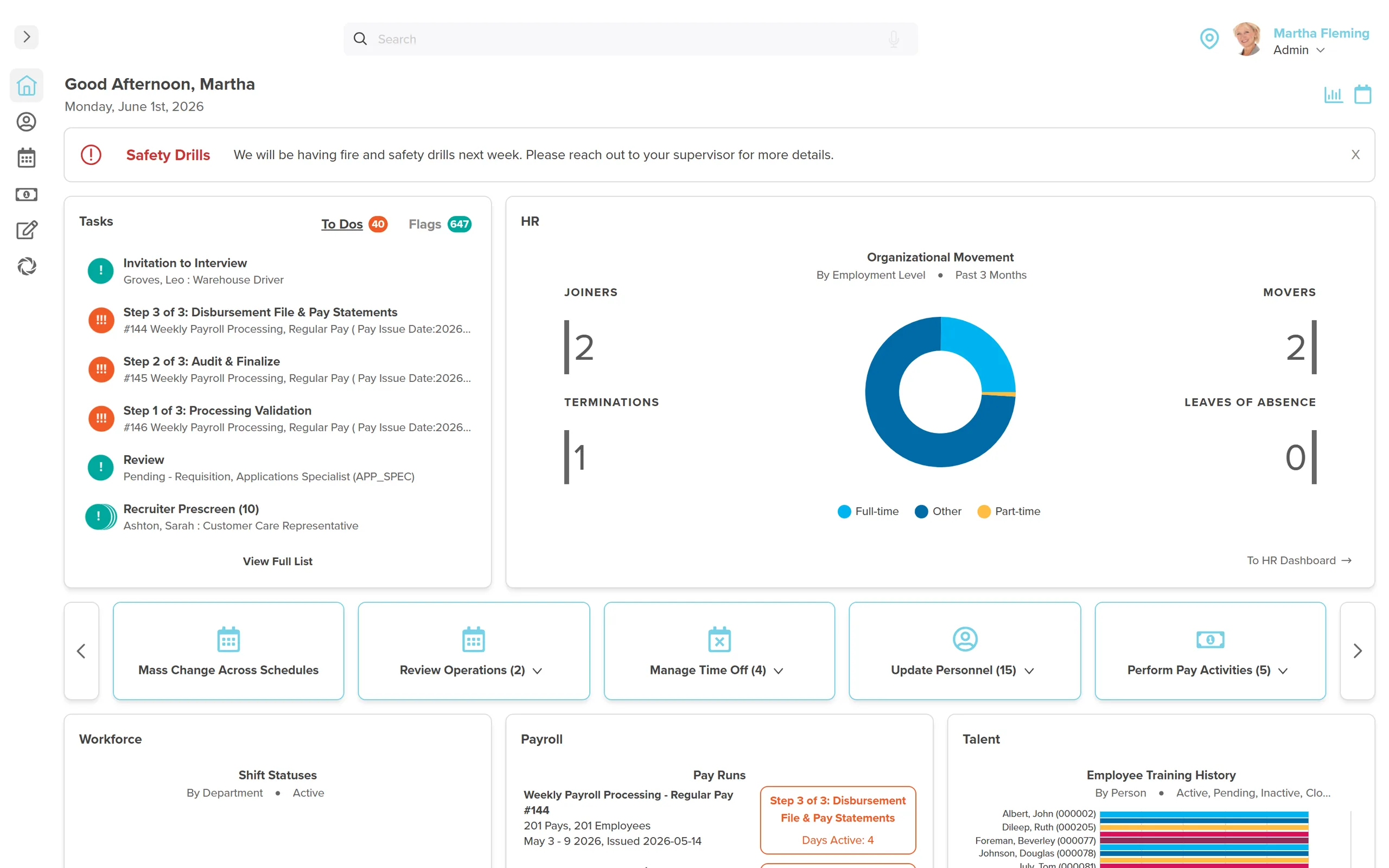
You start the job. Three systems don't talk to each other, a spreadsheet still holds the vacation balances, and leadership wants a strategy on their desk in ninety days. Skip the strategy deck. The real new HR manager checklist starts with a map, not a mission statement.
Your first HR strategy document should be a map of every system your employee data crosses, not a mission statement nobody will read. The vendor calls, the board deck, the headcount request: all of it waits until that map exists.
We've watched this pattern repeat at employer after employer. A new HR manager's first ninety days shouldn't produce a strategy document. They should produce a system map: every place employee data lives, every manual handoff, every real risk, before you decide what to fix, patch, or replace.
You're not failing at this job. The three-to-five-system patchwork you inherited is failing you, and it's been failing the person before you for years. That's not a knock on whoever ran HR before you. It happens. It's what happens when a company grows past 150 employees on tools bought one urgent problem at a time.
- Spend weeks one through four mapping every system employee data touches before writing anything called a strategy.
- Nearly 80% of organizations run two to seven HR tools from different vendors, and fewer than 40% report those tools integrate well (HR.com, cited by Dayforce, 2025).
- Fragmented HR/payroll systems at 250-500 employee organizations eat over 20 hours a month in payroll corrections versus 6 hours for connected systems (Paylocity, 2026 State of Payroll).
- Fix what costs nothing in month one: missing banking data, undocumented approval chains, duplicate headcount numbers.
- Decide patch vs. replace using three questions: is the vendor still supporting it, does it trap your data, is the manual workaround growing or shrinking.
Why Your First 90 Days Should Start With an Audit, Not a Strategy Deck
Only 9% of HR functions are both highly efficient and well aligned to what the organization actually needs, according to Gartner. That gap doesn't close because someone wrote a good strategy. It closes because someone found out where the actual breakage was first.
A strategy written in week two is a guess wearing a suit. You haven't seen a full pay cycle yet. You don't know which system the payroll clerk secretly trusts more than the official one, or if the applicant tracking tool is even used, or if hiring managers just email resumes around it. Write the roadmap before that audit and you're committing budget to problems you haven't confirmed exist.
How Many Systems Does One Employee Record Really Cross?
Pull one employee, any employee, and trace their record everywhere it lives. The offer letter in email. The TD1 in a filing cabinet or a shared drive. The time clock export that gets hand-keyed into payroll. The benefits carrier portal. The spreadsheet tracking who's eligible for what leave. Most HR managers land somewhere between three and seven systems before they stop counting.
That's normal, and it's the actual problem. Nearly 80% of organizations run between two and seven paid HR solutions from different vendors, but fewer than 40% say those tools integrate well or extremely well, per an HR.com survey cited by Dayforce. You didn't inherit a strategy gap. You inherited a broken chain of systems wearing a strategy costume.
Source: Paylocity, 2026 State of Payroll
Write that number down. That's the audit. You'll need it in week eleven.
Week One to Four: The Fixes That Cost Nothing
Before you touch a vendor contract, fix what's broken for free. This is the part most new HR managers skip because it feels too small for a strategy, and skipping it is exactly why year one gets eaten by fires instead of progress.
- Close the banking and TD1 gaps. Pull a report of every employee missing direct deposit information or a current TD1. This alone prevents the manual off-cycle pay run that eats a Friday afternoon.
- Document the approval chain as it actually runs, not as the org chart says it runs. Half of leave and expense approvals in a fragmented system route through someone's inbox, not the software.
- Find every spreadsheet standing in for a system. Vacation balances, certifications, org charts kept in Excel are the first things that break when someone's on leave.
- Reconcile the headcount number. Payroll's active count and HR's active count rarely match in a fragmented setup. Find out why before you're asked in a board meeting.
Building the Business Case Finance and IT Will Actually Sign
Three doors decide whether HR software gets bought at a mid-market employer: HR evaluates it, finance signs off on it, and IT decides whether it can actually go live. Miss one and the deal dies quietly in month four.
Finance wants the cost of doing nothing, in dollars. Small businesses face roughly $12,000 a year in overall regulatory compliance costs, of which payroll and HR administration is a meaningful share, per the National Small Business Association's Small Business Regulations Survey, and that's before the correction hours from the Paylocity numbers above. IT wants to know what breaks during migration and who owns the data mid-switch. Bring both answers, not just the pitch.
County of Renfrew, an Ontario municipality, replaced paper-based onboarding with a digital process and onboarded 32 employees in a single pay period with zero paper. Cable Bahamas runs payroll for roughly 850 employees with a three-person team after consolidating onto one platform. Neither started with a strategy deck. Both started by mapping what was actually broken. For more on what that process looks like end to end, our HR software implementation guide walks through it.
When to Patch the Current System and When to Recommend Replacing It
Patching is the right call more often than vendors want you to believe. Replace something and you inherit a migration project. Patch it and you inherit a Tuesday. Ask three questions before recommending either one.
- Is the vendor still actively supporting it, or are you the last customer on a sunsetting product?
- Does the system trap your data in a format nobody can export cleanly, or can you get a clean file out in an afternoon?
- Is the manual workaround around this system growing or shrinking as headcount grows?
If all three favour the incumbent, patch it and spend your political capital elsewhere. If the vendor is sunsetting, the data's locked, and the workaround gets worse every quarter, that's your replacement case, and now you have the numbers to make it. Our list of HR software buying mistakes that cost employers millions is worth reading before you sign anything.
The 90-Day Plan on One Page
Days 1 through 30: map every system, reconcile headcount, close the free fixes. Days 31 through 60: quantify the cost of the current mess in hours and dollars, and start the finance and IT conversations early, not at the reveal. Days 61 through 90: bring a patch-or-replace recommendation for each broken system, backed by the numbers.
A real HR strategy is what you write after that. Not before. If you want to see what a connected system looks like once you've made the case, our guide to what an HRIS actually does is a reasonable next stop, and our breakdown of the real ROI of consolidating onto one platform has the numbers finance will ask for. Succession planning waits until this is solid. Our succession planning guide covers where that fits once your foundation stops moving under you.
Bring your system map to a real conversation
Workzoom runs HR, payroll, workforce, and talent on one employee record, starting at $4 per employee per month per suite, no setup fees, no contracts. Bring the list of systems you inherited and we'll show you exactly what consolidates and what doesn't.
Tell Us What You Need to SeeSee Workzoom in 30 minutes.
Real product, real questions, no slides. Starts at $4 per employee per month, CAD or USD, with $0 setup fees.
What readers ask after this post on new HR manager checklist.
Our clients
The teams that run their people on Workzoom.













Workzoom handles HR, payroll, workforce, and talent on one employee record. Book a 30-minute walkthrough.