 Canada
 United States
 Bahamas
 Jamaica
 Trinidad & Tobago
 Antigua & Barbuda
 Barbados
 Anguilla
HR Software for Children's Aid Societies in Canada

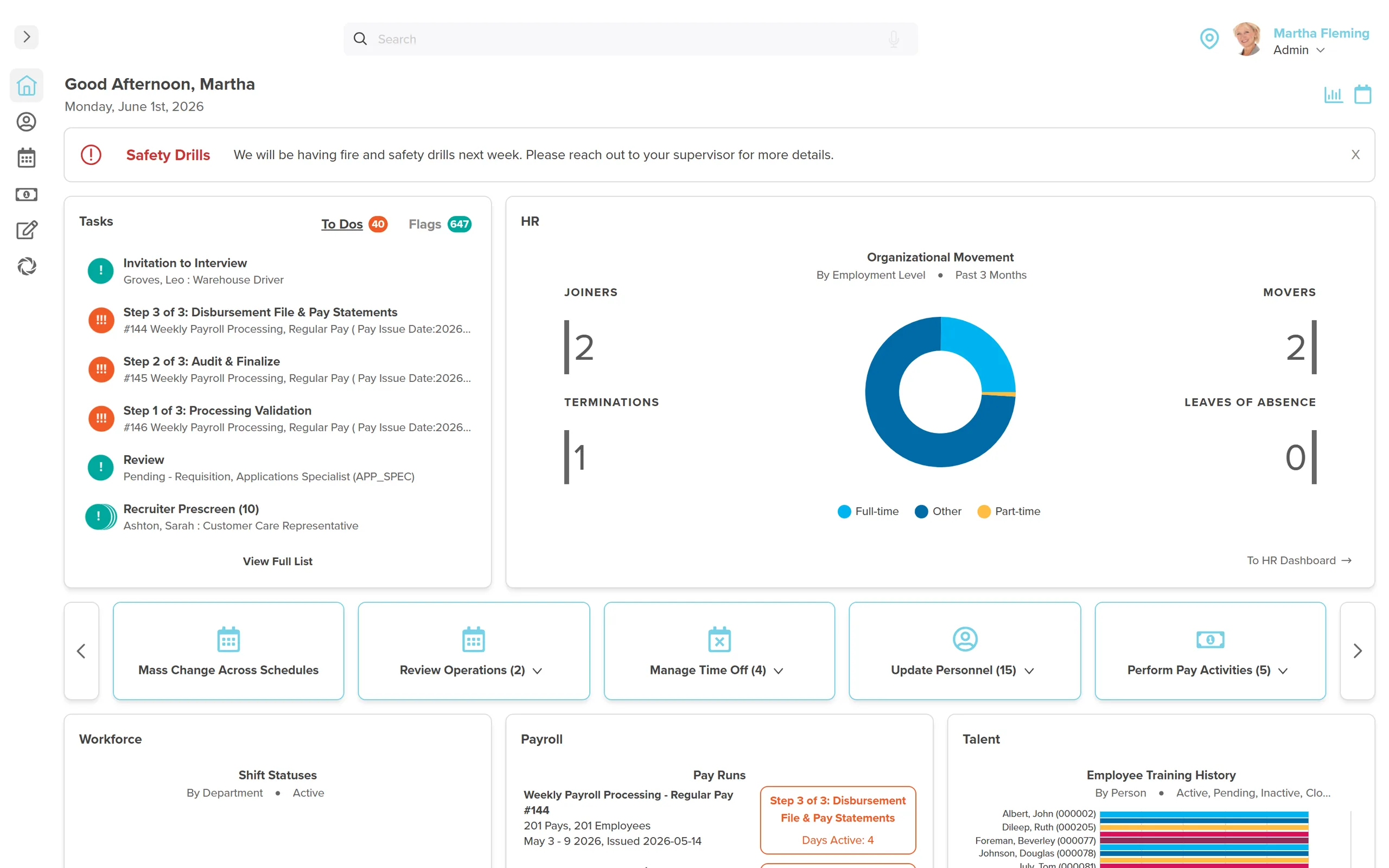
Most demos skip the part that breaks a Children's Aid Society. The vendor shows a clean payroll run with one rulebook. The HR software a CAS in Canada actually needs has to track CUPE agreements, OCSWSSW credentials, and caseworker onboarding all at once.
The best HR software for Children's Aid Societies handles what generic platforms cannot: CUPE collective agreement payroll with automatic step progressions, OCSWSSW registration tracking with tiered alerts, and digital caseworker onboarding that closes compliance gaps before day one. Workzoom is trusted by Toronto Catholic CAS, Huron-Perth CAS, Sarnia-Lambton CAS, and Thunder Bay CAS.
- Every CAS caseworker must hold an active OCSWSSW registration. A lapsed registration means no caseload, and most HR teams find out too late.
- CUPE child welfare agreements have pay grid steps, on-call minimums, and after-hours premiums that most payroll software handles wrong.
- Digital onboarding that closes compliance gaps before day one changes what "ready to work" actually means.
- Two or three HR staff managing 150-400 employees need a system that does the tracking, not a system they have to track manually.
On discovery calls, the version of this we hear most goes like this. A caseworker's OCSWSSW registration quietly lapses. Files are already assigned. The registration has been expired for weeks before anyone notices. Nobody had checked the spreadsheet.
This isn't a horror story. It's a Tuesday.
Tracking 80 or 120 annual renewal dates manually, across a team where new caseworkers join and leave throughout the year, is not a system. It's optimism. And optimism has a shelf life.
A Lapsed Registration. Files Already Assigned.
Here's why this matters more at a CAS than almost anywhere else.
A caseworker with a lapsed OCSWSSW registration is not legally registered to practise. That means no active caseload. If the lapse is discovered during a complaint investigation or a Ministry of Children's Services review, the question isn't just about the individual worker. It's about the Society's supervision practices. About whether the organization has a system to prevent this. About what that system is.
"We track it in a spreadsheet" does not answer that question well.
Most CAS HR teams don't find out a registration lapsed until something forces the check. That's not a discipline problem. That's a tooling problem.
The fix is a credential record in the HR system, not a side spreadsheet. Registration number, expiry date, renewal status. Automated alerts at 90, 60, and 30 days, to both the caseworker and their supervisor. Not a calendar reminder someone has to check. An alert that goes out whether or not anyone remembers to look.
And when a registration lapses, the supervisor is flagged before new files are assigned, so the renewal gets confirmed first. The alert reaches the supervisor before the assignment happens, not an audit finding after.
Tell us which compliance gap you're managing manually. We'll show you how we close it.
OCSWSSW registration tracking, CUPE payroll, and digital caseworker onboarding in one connected platform. Trusted by Toronto Catholic CAS, Huron-Perth CAS, Sarnia-Lambton CAS, and Thunder Bay CAS. $4 per employee per month per suite. No setup fees. No contracts.
Tell Us What You Need to SeeThe Union Notices Before You Do
CUPE child welfare agreements are among the most detailed collective agreements in the Ontario public sector.
Pay grid steps that advance on service anniversaries. On-call standby rates. Callback minimums when a worker is actually called in. After-hours premiums that calculate differently on weekdays, weekends, and statutory holidays. Vacation entitlement that scales across specific service milestones.
Generic payroll software applies one set of rules. It doesn't know about your local's step progression schedule or what your collective agreement says about Saturday callback pay after midnight.
The pattern we see across our Canadian client base is that the agreement rules are never the hard part to write down. They're the hard part to keep right, every cycle, after the person who configured them moves on.
When the rules are wrong, the union notices. Not necessarily right away, but during a contract audit, at which point the errors aren't corrections anymore. They're grievances, with retroactive liability and a formal process that consumes management and HR time for months.
The manual check step that payroll staff add after every run, pulling the agreement, comparing the calculated output to what the agreement says, that check exists because the system isn't trusted. If the rules are configured correctly in the software, the check disappears. That's the goal.
What the Paper File Doesn't Catch
Onboarding a caseworker involves more compliance steps than almost any other sector.
OCSWSSW registration verified and on file. Vulnerable sector police check received. Mandatory training complete (PRIDE, SAFE, cultural competency where applicable). CUPE orientation documented. Benefits enrollment within the defined window.
Running this on paper means HR staff chasing documents from multiple sources, manually tracking completion status, relying on the new hire to remember what they still owe. Gaps in the paper file get discovered when someone reviews a complaint. Not before.
Digital onboarding that pre-populates the compliance checklist, tracks completion in real time, and blocks certain steps until required items are received is a different experience entirely. The new caseworker completes as much as possible before day one. HR sees what's outstanding without asking. The goal is simple: most of the compliance package done before day one, not chased down in the weeks after.
HR Software for Children's Aid Societies in Canada: The Two-Person Team Problem
A 100-to-380-person CAS typically runs with two or three HR staff. Those same people handle recruitment for high-turnover frontline positions, manage CUPE relations, run onboarding for caseworkers and administrative staff, and keep credentials current across 80 or more registered workers.
That's a lot of work for a small team to do with manual processes.
The right HR software doesn't add complexity. It removes it. Step progressions apply automatically. Credential alerts go out without anyone scheduling them. Onboarding checklists populate from a template. Payroll calculates from the agreement rules, not from a manual entry the payroll administrator makes from memory.
You got into HR to support the people who protect kids, not to babysit a renewal spreadsheet. The work that earns your week is the work only a person can do, not the tracking a system should have caught.
Workzoom is trusted by Toronto Catholic Children's Aid Society (380 employees), Huron-Perth CAS, Sarnia-Lambton CAS, and Children's Aid Society of the District of Thunder Bay. Pricing: $4 per employee per month per suite, no setup fees, no contracts. Save 5% with annual billing. Full platform is $16 per employee per month. Implementation, data migration, training, and ongoing support included.
More on the platform's CAS-specific features at workzoom.com/industries/childrens-aid. External reference: Ontario College of Social Workers and Social Service Workers maintains the registration requirements every CAS HR team is accountable for tracking.
See Workzoom in 30 minutes.
Real product, real questions, no slides. Starts at $4 per employee per month, CAD or USD, with $0 setup fees.
What readers ask after this post on HR software children's aid societies Canada.
Our clients
The teams that run their people on Workzoom.













Workzoom handles HR, payroll, workforce, and talent on one employee record. Book a 30-minute walkthrough.