 Canada
 United States
 Bahamas
 Jamaica
 Trinidad & Tobago
 Antigua & Barbuda
 Barbados
 Anguilla
Antigua and Barbuda Labour Code: Not a Bahamas Template

The call came in on a Tuesday morning. An expanding resort chain had just acquired a property in Antigua and Barbuda and discovered their standard employment contracts violated three different sections of local labour law. Six months of operations, dozens of employees hired, and nobody had checked the Labour Code.
Most employers assume the Caribbean is one market. It isn't. It's twelve labour codes wearing one accent. The resort chain didn't fail because their lawyers were careless. They failed because their Bahamas contract template was, technically, a different country's law printed on Antiguan letterhead.
It's not a paperwork problem. It's a payroll-engine problem. Every leave accrual, every notice period, every severance multiplier the Code defines has to live somewhere a person can be trusted to apply it on the right day, and a filing cabinet is not that place.
Antigua and Barbuda's Labour Code governs all employment relationships in the twin-island nation, establishing minimum standards for contracts, leave entitlements, and termination procedures. The Code requires written contracts for most positions, mandates specific notice periods, and provides wide leave benefits including 14 days annual leave and 14 weeks maternity leave.
- All employment contracts must be in writing and include specific mandatory terms
- Annual leave accrues at one day per month of service, about 12 working days a year
- Maternity leave extends to 14 weeks with partial pay protection
- Termination notice runs one pay interval, capped at 30 days, with 24 hours during probation
- Severance pay is required after more than one year of service, at one day's pay per month of service
For employers operating in Antigua and Barbuda, whether you're a resort managing seasonal staff, a financial services firm, or a growing local business, understanding these requirements isn't optional. It's the foundation of compliant operations.
Employment Contracts Under the Antigua and Barbuda Labour Code
The Labour Code is clear: employment relationships require written contracts. This isn't a suggestion for formal positions, it's mandatory for any employee working more than one month.
Your employment contracts must include several specific elements:
- Names and addresses of both employer and employee
- Job title and description of duties
- Place of work and any mobility requirements
- Start date and contract duration (if fixed-term)
- Wage or salary details including payment frequency
- Hours of work and any overtime arrangements
- Holiday and leave entitlements
- Notice periods for termination
- Disciplinary procedures
The resort chain I mentioned earlier? They'd been using their Bahamas templates. Different country, different rules. Antigua requires more detailed job descriptions and has specific language around mobility clauses that their standard contracts missed entirely.
When Nassau Airport Development Company expanded operations across the Caribbean, we learned quickly that each jurisdiction has its own requirements. What works in the Bahamas doesn't automatically work in Antigua.
Fixed-term contracts deserve special attention. The Labour Code allows them for specific project work or seasonal employment, common in tourism, but they can't exceed three years. One detail worth flagging: if you repeatedly renew fixed-term contracts for the same employee, the law may treat the relationship as permanent employment with enhanced protection.
Working Time and Overtime Requirements
Standard working hours in Antigua and Barbuda are 40 hours per week, typically arranged as eight hours per day over five days. The Labour Code allows flexible arrangements, but overtime rules kick in after these thresholds.
Overtime compensation is straightforward: time and a half for any work beyond the standard 40-hour week. Unlike some Caribbean jurisdictions that have daily overtime thresholds, Antigua focuses on the weekly total.
Overtime is calculated weekly, not daily. An employee working 10 hours Monday through Thursday earns no overtime until they exceed 40 hours total for the week.
Rest periods matter too. Employees must receive at least one full day off per week, typically Sunday, though other arrangements are permissible with employee consent. During the working day, lunch breaks of at least one hour are required for shifts longer than six hours.
Leave Entitlements and Public Holidays
Annual leave in Antigua and Barbuda accrues at one day for every month of continuous service, about 12 working days a year. Unlike some jurisdictions where the full entitlement lands as a lump sum on an anniversary date, leave in Antigua and Barbuda builds monthly.
The timing matters for seasonal businesses. A resort employee starting in December earns a day of leave for every completed month worked, rather than waiting a full year for a lump-sum entitlement.
Public holidays include familiar dates like New Year's Day, Good Friday, and Christmas, plus local observances like Independence Day (November 1) and Carnival Monday and Tuesday. When a holiday falls on a weekend, it's observed on the following Monday.
Sick leave provisions are generous: 22 working days per year for employees with more than one year of service. The first three days require no medical certificate; longer absences need documentation from a registered medical practitioner.
Maternity leave extends to 14 weeks, six weeks before expected birth and eight weeks after, though the split can be adjusted with medical approval. Employees with at least 12 months of service receive 60% of their regular wages during this period.
Paternity leave is more limited: three days following the birth of a child.
Termination Procedures and Notice Requirements
Termination in Antigua and Barbuda follows a structured approach based on length of service and circumstances. The Labour Code distinguishes between termination with cause, termination without cause, and redundancy, each with different requirements.
Notice periods for termination without cause:
Notice runs to one full pay interval, capped at 30 days, regardless of length of service. During probation, notice drops to 24 hours.
Payment in lieu of notice is permissible, and often preferred by both parties. An employee on a monthly pay interval can receive up to 30 days' wages instead of working through the notice period.
We had an employee who wanted to leave immediately for another opportunity. Paying out the pay interval in lieu of notice actually worked better for our scheduling than having them work through it.
Severance pay becomes required after more than one year of service: one day's pay for each month of employment. This can accumulate significantly, an employee with ten years' service would receive roughly 120 days' severance pay upon termination without cause.
Termination for serious misconduct bypasses notice requirements, but the misconduct must be genuine and documented. The Labour Code provides grounds including theft, assault, persistent lateness despite warnings, and breach of confidentiality.
Managing Caribbean employment law compliance across multiple jurisdictions?
Workzoom is capable of handling Caribbean HR requirements, including Antigua and Barbuda's specific labour code rules. HR, Workforce, and Talent are available today across the Caribbean. Starting at $4/employee/month with no implementation fees and month-to-month billing.
See Caribbean compliance in actionSpecial Considerations for Different Employment Types
Seasonal employment is common in Antigua and Barbuda's tourism sector, but it doesn't reduce employer obligations. Seasonal employees still earn pro-rated leave entitlements and qualify for full severance pay calculations if employed across multiple seasons.
The key is continuity. An employee who works six months, takes three months off, then returns for another season may have continuous service for legal purposes. This affects everything from leave calculations to termination notice requirements.
Part-time employees receive proportional benefits based on their working hours. Someone working 20 hours per week earns half the annual leave of a full-time colleague.
Probationary periods are permitted but must be specified in the employment contract. The maximum probationary period is six months for most positions, during which termination notice requirements are reduced to one day regardless of the standard scale.
Compliance Monitoring and Penalties
The Department of Labour conducts routine inspections and investigates employee complaints. Penalties for non-compliance range from fines to criminal charges for serious violations.
Common compliance issues we see include:
- Missing or incomplete employment contracts
- Incorrect overtime calculations
- Failure to provide required rest periods
- Inadequate record-keeping
- Improper termination procedures
Record-keeping requirements are extensive. Employers must maintain employment records for each employee including contracts, wage records, leave taken, disciplinary actions, and termination documentation. These records must be available for inspection and retained for at least three years after employment ends.
Keep meticulous records. The Department of Labour can request employment documentation during inspections, and missing records create presumptions in favour of employee claims.
Practical Implementation for Employers
Start with your employment contracts. Review every current contract against the mandatory elements list above. Missing components create compliance risks and weaken your position in any employment dispute.
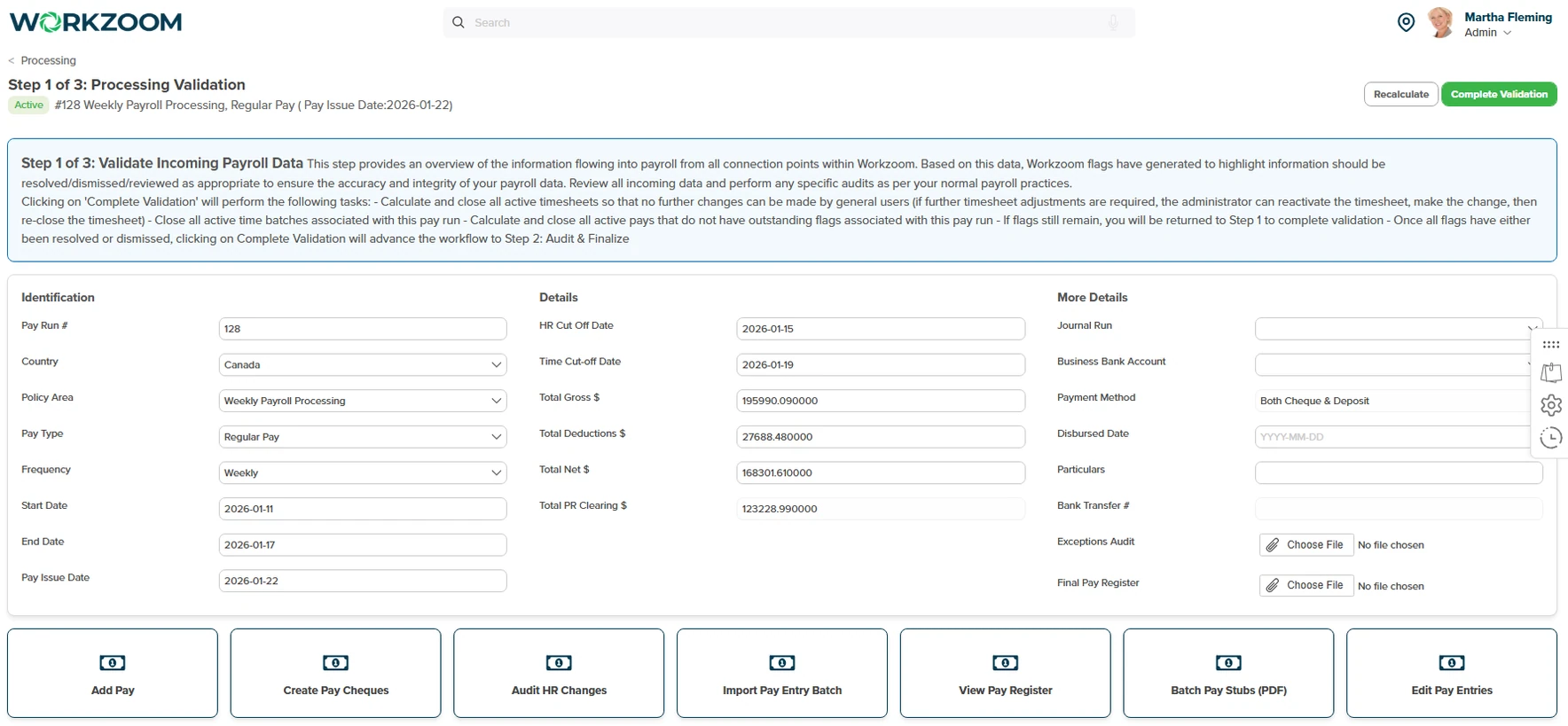
Payroll systems need to accommodate Antigua and Barbuda's specific requirements: overtime calculations, leave accruals, public holiday payments, and severance calculations. Manual tracking becomes unwieldy as you grow beyond a handful of employees.
For multi-jurisdictional employers, the challenge multiplies. Different notice periods, leave entitlements, and public holidays across Jamaica, Barbados, Trinidad, and Antigua require either multiple payroll systems or a platform designed for Caribbean complexity. The contrast is stark next door: Trinidad and Tobago's termination and severance rules run on a different math entirely, and an employer working both islands needs both sets encoded, not memorized.
Across our Caribbean deployments, the failure mode is almost never a missing law. It's a known law applied a week late by a busy supervisor. Encode the rule once, apply it every payroll. That gap is the whole difference between a compliant payroll and a Labour Department file.
Island Luck operates across multiple Caribbean markets including Antigua. Managing different labour requirements manually would be impossible at our scale, we need systems that understand each jurisdiction's specific rules.
Training your management team matters too. Supervisors making termination decisions need to understand notice requirements and documentation standards. A poorly handled termination can result in wrongful dismissal claims, severance obligations, and Labour Department intervention.
Recent Developments and Future Considerations
The Antigua and Barbuda government periodically updates employment legislation to align with International Labour Organization standards and regional economic developments. Recent discussions have focused on strengthening anti-discrimination provisions and expanding family leave benefits.
Regional integration efforts may also influence employment law. As Caribbean economies become more connected, labour mobility agreements could affect how employment relationships are structured and regulated.
For now, focus on current compliance requirements while staying informed about proposed changes. The Labour Code as it stands provides a full framework. The challenge is implementing it correctly across your operations.
Getting Antigua and Barbuda employment law right goes beyond avoiding penalties. It's about building sustainable employment relationships in a competitive Caribbean labour market. Employees who understand their rights and see them respected become your strongest advocates for attracting talent in tight markets. The same logic runs through good people management in Antigua and Barbuda: compliance done well is retention done quietly.
You got into HR to develop people, not to audit contract templates against three different countries' statutes every time the company opens a property. When the rules live in the system instead of in your head, you stop being the compliance bottleneck and start being the source of truth. It's not your competence that's stretched thin: it's a manual process asked to do a machine's job.
That resort chain from the opening? They spent three months updating contracts, retraining managers, and implementing proper record-keeping systems. Six months later, their employee satisfaction scores were the highest across their Caribbean portfolio. Compliance became a competitive advantage.
See Workzoom in 30 minutes.
Real product, real questions, no slides. Starts at $4 per employee per month, CAD or USD, with $0 setup fees.
What readers ask after this post on Antigua and Barbuda labour code.
Our clients
The teams that run their people on Workzoom.













Workzoom handles HR, payroll, workforce, and talent on one employee record. Book a 30-minute walkthrough.