 Canada
 United States
 Bahamas
 Jamaica
 Trinidad & Tobago
 Antigua & Barbuda
 Barbados
 Anguilla
3 Month Probation Period Rights Ontario: The Day-90 Test

Miss the day-90 window on a new hire who isn't working out, and the math changes overnight. One day you can end things with nothing owed beyond final pay. The next, statutory notice is owing under the Act, in Ontario and in Alberta, whether or not the offer letter ever used the word "probation."
Here's the direct answer. Ontario's Employment Standards Act does not define a probation period at all. It grants exactly one thing: an exemption from statutory termination notice and termination pay for employees with less than three months of service. Everything else, minimum wage, vacation pay, statutory holidays, overtime, human rights protection, applies from an employee's very first day. Treating the exemption as a general "rights-free zone" is where employers get burned.
- Ontario exempts employees with under 3 months of service from statutory notice of termination only, not from any other ESA entitlement.
- Alberta uses a 90-day line instead of a calendar quarter, and both can fall on different actual dates.
- After the threshold passes, notice becomes mandatory even if a written contract sets a longer probation period.
- A probation clause has to be written into the contract. Nothing about it is automatic or implied.
- An Alberta court ruled in 2024 that dismissing a probationary employee still requires proper justification, not just a clean calendar date.
You're not confused because you missed a training. The confusion is built into the term. "Probation" is a phrase employers borrowed from contract law and bolted onto a statute that only ever talks about notice periods and length of service. The ESA never asks whether someone is "on probation." It asks how long they've worked for you. That's the whole test.
What "Probationary Period" Actually Means in Canadian Law
A probationary period is a contract term, not a statutory one. Ontario courts have been clear on this: the clause has to be expressly and unambiguously written into the employment agreement to be enforceable. If it isn't there in writing, you don't get to invoke it later. No implied probation exists, and a verbal understanding at the interview doesn't count.
The ESA gives you exactly one automatic thing, no clause required: a notice exemption for anyone under three months of service. That's the whole statutory idea behind the word "probation."
Probationary Period Rights in Ontario: What Changes at Day 90
Under section 54 of Ontario's Employment Standards Act, 2000, an employee with less than three months of continuous service isn't entitled to notice of termination or termination pay. Fire them on day 45 for performance, and the employer's statutory obligation is final wages and nothing more on the notice front.
But probation period rights run both directions. From day one, the employee is entitled to minimum wage, vacation pay, statutory holiday pay, and overtime pay. Human rights protections apply immediately too. Fire someone in week two for a discriminatory reason and the three-month exemption does nothing for you. It only ever touched notice.
Cross the three-month line and the exemption is gone for good. Doesn't matter if your offer letter set a six-month probation. Ontario's minimum notice kicks in at three months no matter what the contract says.
Can You Terminate an Employee During Probation?
Yes, and without statutory notice, provided you're inside the window and the reason isn't discriminatory or made in bad faith. Ontario case law expects employers to give a probationary hire a genuine, fair chance to demonstrate they're suited to the role before cutting them loose. "We changed our mind" needs to be backed by something real, not a pretext.
That ruling closes a door a lot of employers assumed was open. Probation is a lower bar, not a missing one.
Extending a Probationary Period: When It Holds Up
You can extend a probation period contractually, and plenty of employers do when a review comes up short but isn't quite a firing decision. What you can't extend is the ESA notice exemption itself. If the employee crosses three months in Ontario, or 90 days in Alberta, statutory notice applies from that point on, no matter what the contract's probation clause says.
If you're going to extend, document why, get the employee's written acknowledgement, and treat it as a performance management tool, not a compliance shield.
Probationary Period Rules in Alberta and the Rest of Canada
Alberta counts in calendar days, not months, and that small difference is where employers slip. Ninety days after a January 1 start lands earlier than three full months would.
| Jurisdiction | Exemption Threshold | Notice After Threshold |
|---|---|---|
| Ontario | Under 3 months of service | 1 week minimum, scaling with tenure, capped at 8 weeks |
| Alberta | 90 days or less of employment | 1 week (over 90 days) up to 8 weeks (10+ years) |
| Federally regulated (Canada Labour Code) | Under 3 months | 2 weeks minimum, scaling with tenure, capped at 8 weeks |
Every one of these is a floor, not a ceiling. Employment contracts can offer more notice. They cannot offer less than the applicable statutory minimum once the exemption window closes.
The Day-90 Checklist
Before the clock runs out, decide and document three things: whether the hire is a keep, an extend, or a termination. the specific performance basis for that call, in writing. and, if you're terminating, whether it lands inside or outside the exemption window on the calendar, not the offer letter.
Get the date wrong by a day and a no-notice termination becomes an ESA violation. That's not a training problem. It's a records problem. An HR file that tracks start dates, review dates, and decision deadlines by exact date catches this automatically, instead of relying on someone remembering to check a calendar on day 88. See how date-effective employee records close this exact gap, and pair the decision with a documented 30-60-90 day plan so the performance basis is on file well before day 90. If the decision is termination, run the numbers against Ontario's ESA severance minimums before you finalize anything, and keep the broader HR compliance checklist nearby for everything else due that week.
Never miss another day-90 deadline
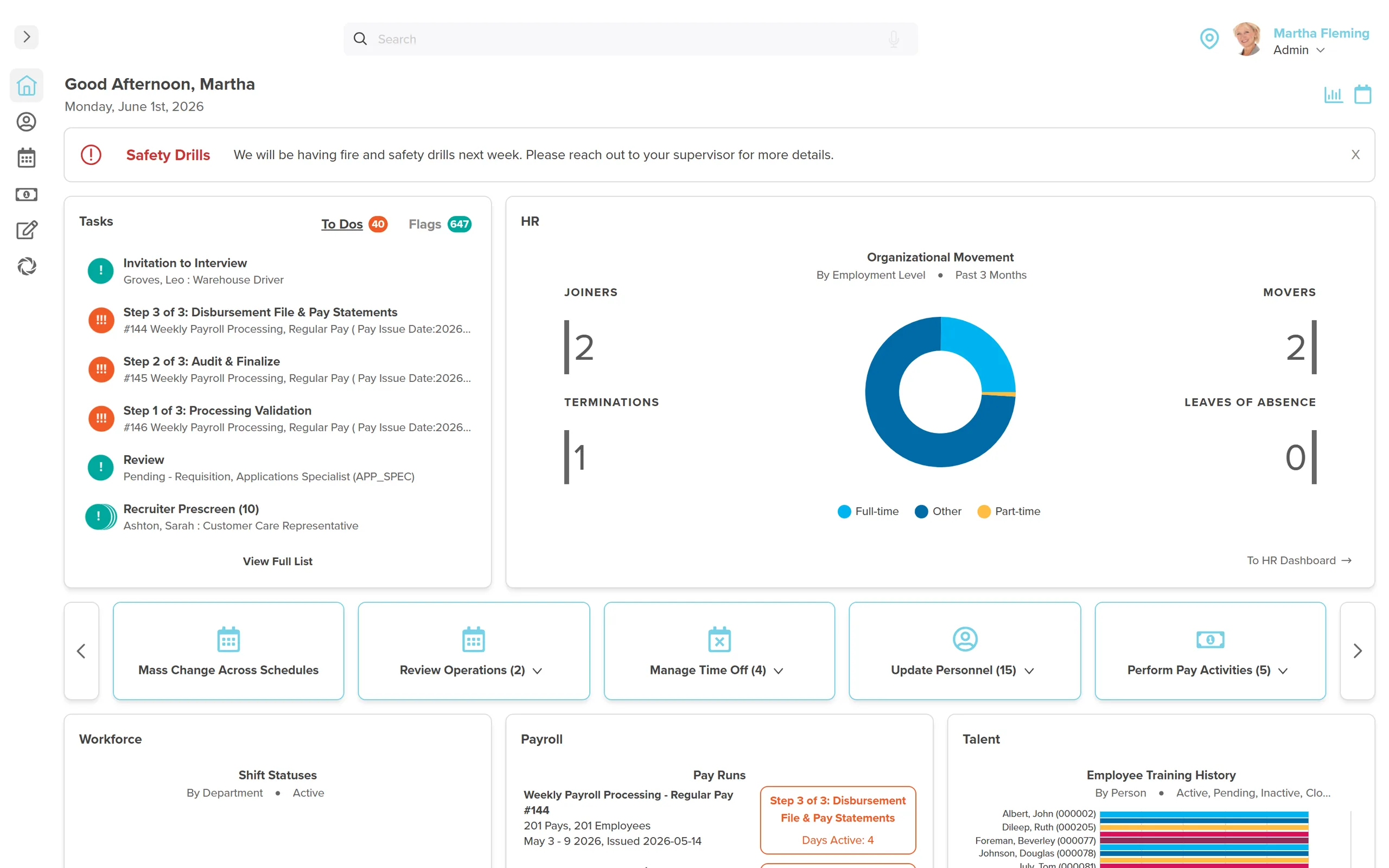
Workzoom tracks every employee's exact start date, review date, and status change with full effective dating. The day-90 decision shows up before it becomes a liability. HR Suite starts at $4/employee/month, no setup fees, no contract.
See how Workzoom keeps you compliant automaticallySee Workzoom in 30 minutes.
Real product, real questions, no slides. Starts at $4 per employee per month, CAD or USD, with $0 setup fees.
What readers ask after this post on 3 month probation period rights Ontario.
Our clients
The teams that run their people on Workzoom.













Workzoom handles HR, payroll, workforce, and talent on one employee record. Book a 30-minute walkthrough.