 Canada
 United States
 Bahamas











Compare workers before filling a gap
Qualified Fill ranks workers against configured criteria such as certifications, preferences and current schedules. Managers review the context and assign coverage.
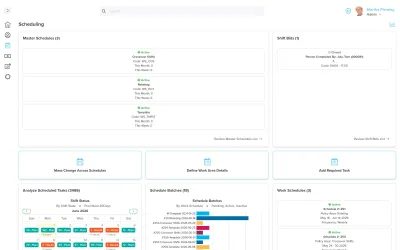
Review vacancies, compare qualified staff and assign coverage across your locations.
Our clients
Benefits
Qualified Fill ranks workers against configured criteria such as certifications, preferences and current schedules. Managers review the context and assign coverage.
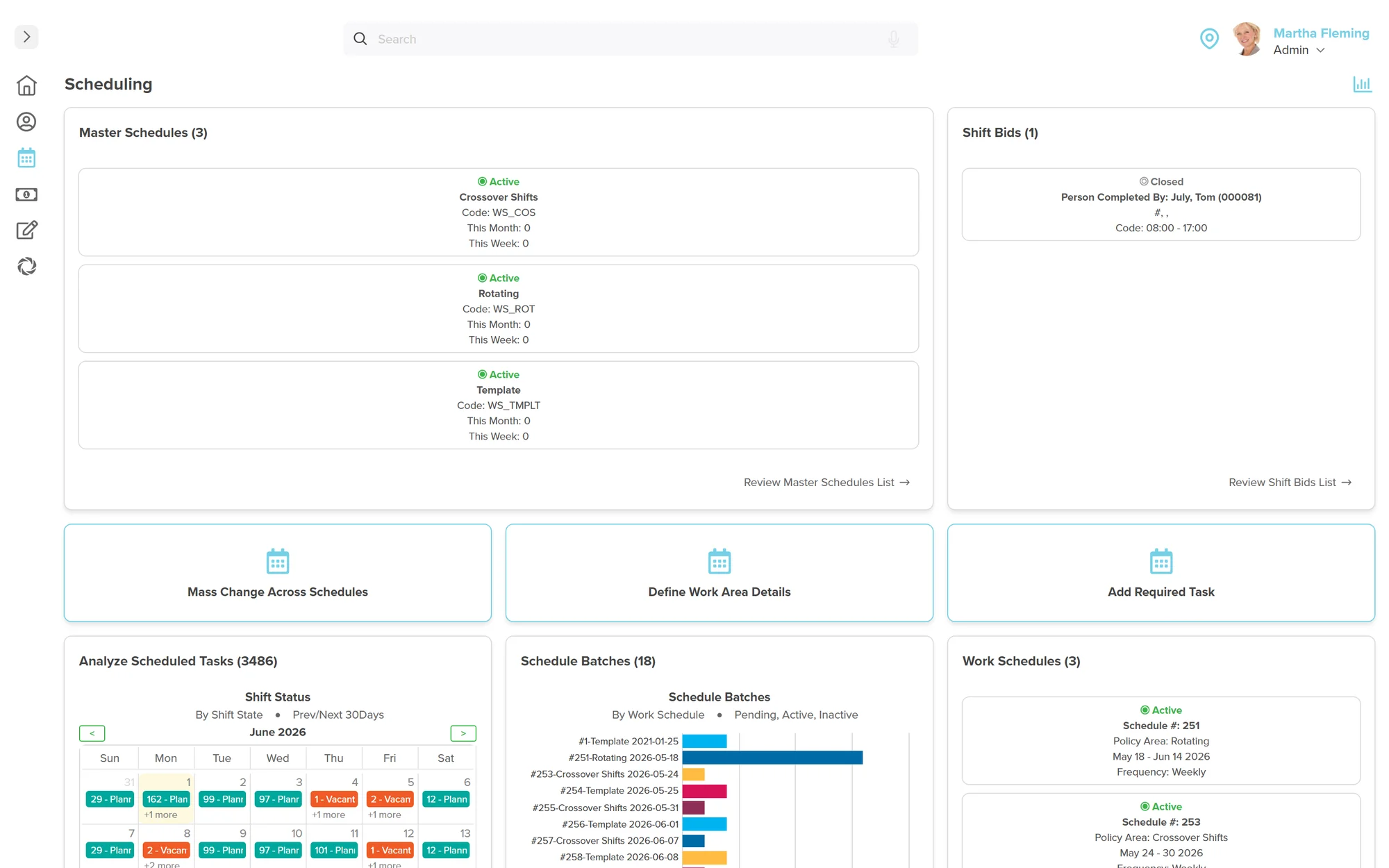
Master schedules support multiple sites or managers. Use rotating or pattern schedules for repeating work and templates for staffing that changes week to week.
A planned shift is not proof of time worked. Managers correct and approve recorded time; approved hours feed the matching pay period when approved before cutoff.
Qualified Fill ranks workers using criteria your team configures, such as seniority, certifications, preferences and current schedules. Hard requirements can exclude a worker entirely.
Workers on leave or partly scheduled may remain lower in the list, so managers review the context before assigning.
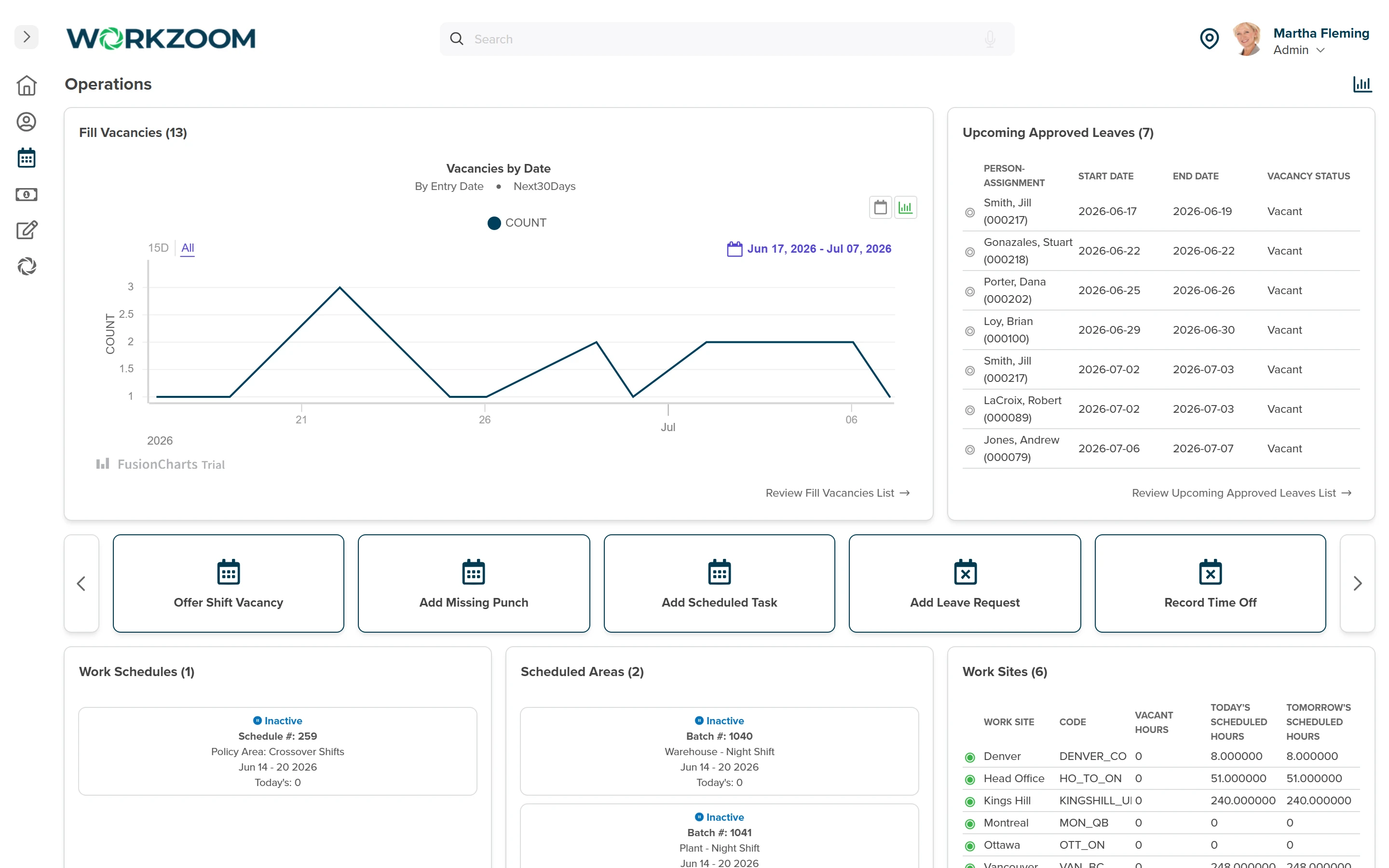
Use rotating or pattern schedules for repeating shifts and templates for staffing that changes week to week.
Editing a generated schedule affects that period; changing a template can update future generated schedules and override their ad hoc edits.
Employees can view eligible vacant shifts and submit bids in self-service. A manager or administrator reviews the bids and assigns the worker.
A shift swap needs acceptance and approval; it is not an automatic two-way trade.
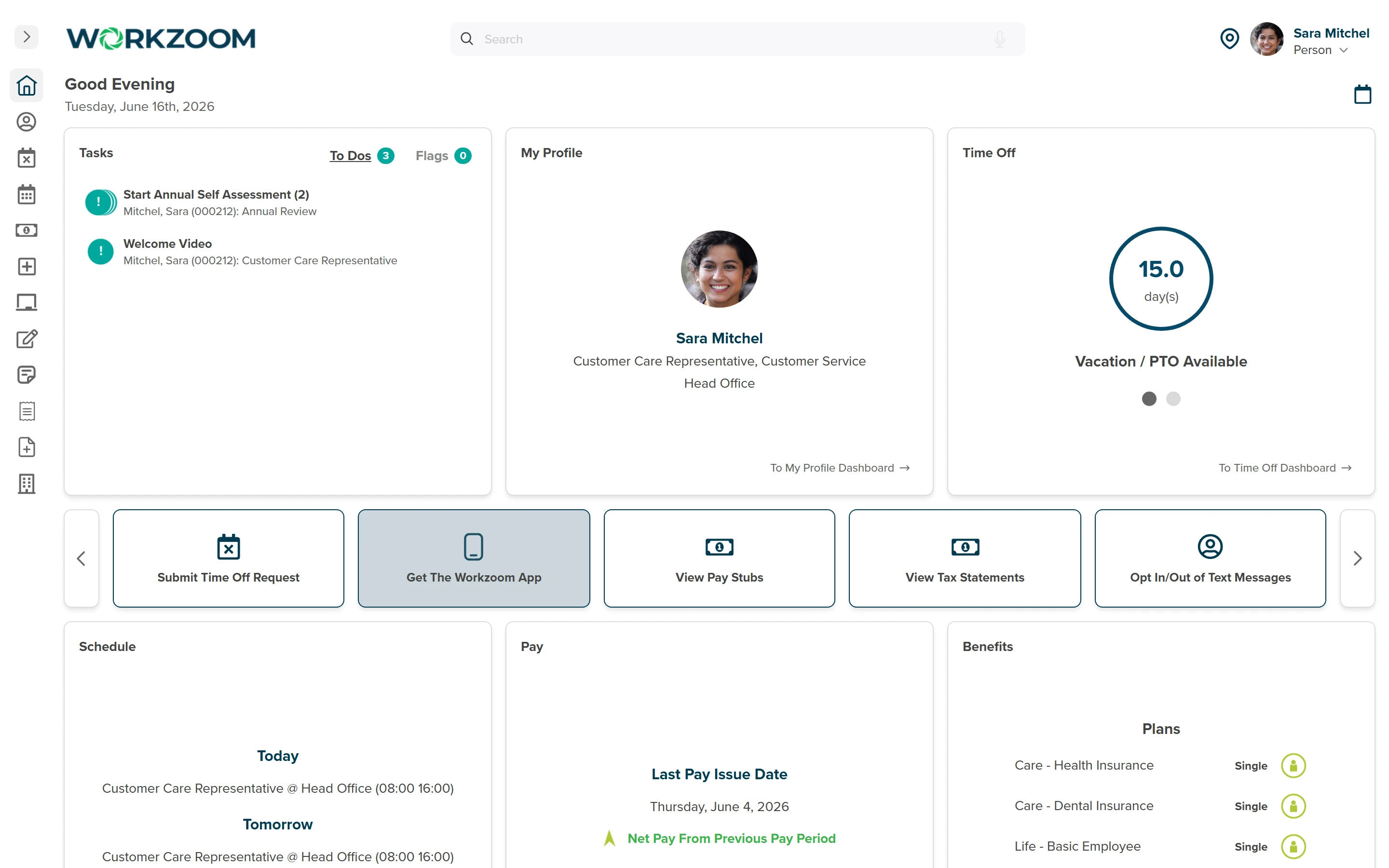
The schedule records planned work; timekeeping captures and reviews what was worked. Managers resolve daily exceptions, then configured time rules apply to recorded time.
Approved timesheet hours reach the matching pay run when approved before the Time Cut Off Date.
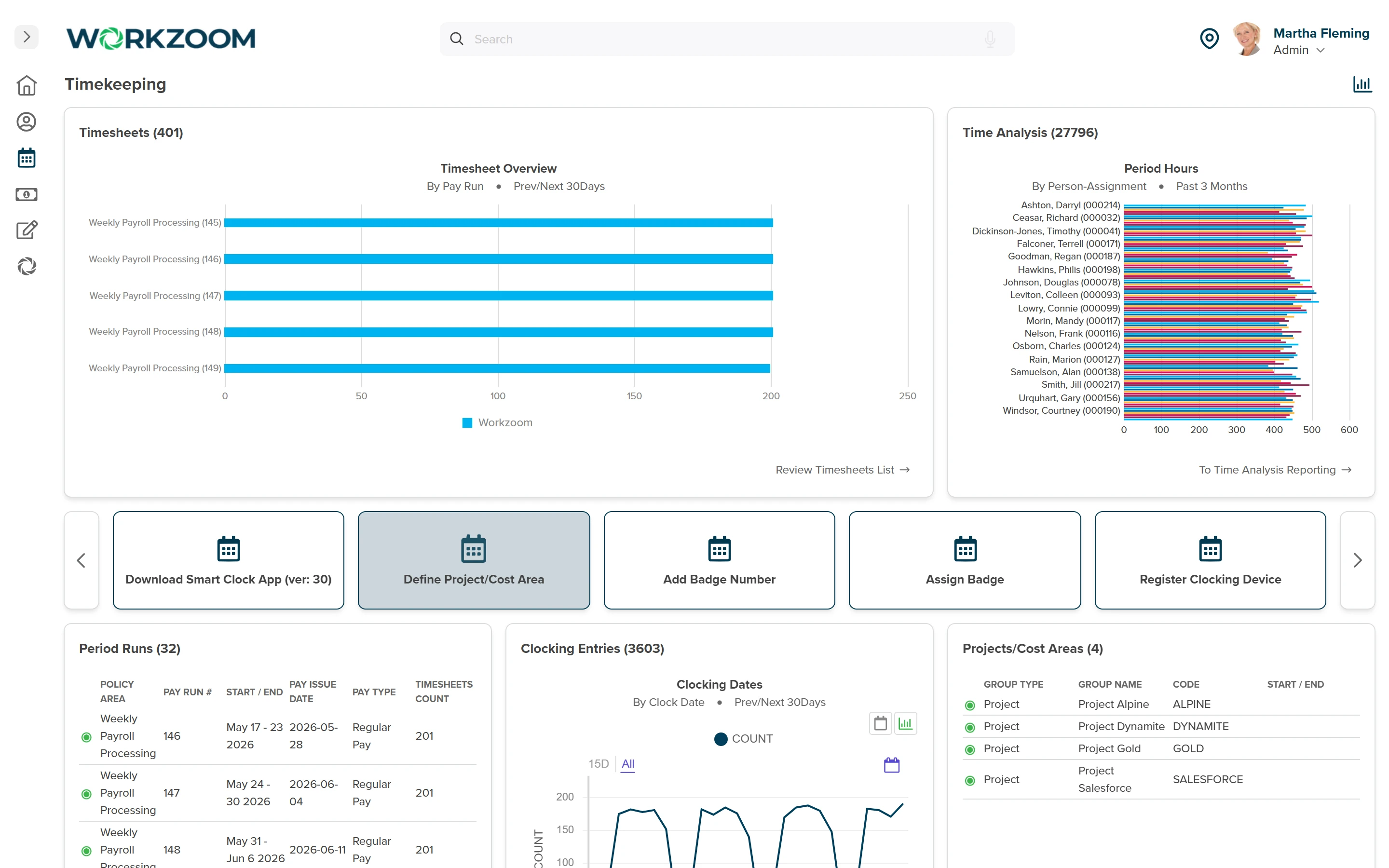
Master schedules support multiple sites and managers. Scheduling teams can group staff under the supervisor responsible for schedules, time exceptions and leave requests.
Confirm those responsibilities and how each team maps to the schedule policy.
Each requirement below is set up for your employee groups. Your team confirms which rules apply.
Review the vacancy, compare candidates and assign coverage.
Where scheduling is enabled, approved full-day leave removes scheduled start and end times and creates a vacancy.
Partial-day leave adjusts the schedule.
Qualified Fill ranks workers using configured criteria such as seniority, certifications, preferences and current schedules.
Hard requirements can exclude a worker; an overlapping schedule does not always remove them from the list.
Employees can bid on eligible vacant shifts.
A manager or administrator reviews the bids and assigns the selected worker; a bid is not an automatic assignment.
Proof
Real teams. Real payroll runs. Hours back, every cycle. View all case studies



Payroll runs seamlessly, and HR processes are no longer a tedious grind. It's simplified how we work, allowing us to focus more on our people.

What mattered most was choosing a solution built for businesses like ours. Workzoom delivered everything we needed, from payroll to facial recognition clocks, and worked with us every step.
Moving to Workzoom was the right move. It gave our dynamic report and payment structures the flexibility we needed, at the right price.
The story
The story
A vacancy needs more than a list of names. Workzoom’s Qualified Fill uses configured criteria such as certifications, preferences, seniority and current schedules. A manager reviews those factors and assigns the worker.
For a synthetic evaluation, approve a full-day absence at one site. Compare a worker missing a required credential with one who has an overlapping shift, then review a submitted bid. Confirm who makes the final assignment. This is a proposed demonstration, not a customer result.
The story
Workzoom supports rotating or pattern schedules for repeating staffing and template schedules for staffing that changes week to week. An edit to a generated schedule affects that period only. A template change can affect future generated schedules, so test that distinction before rollout.
Island Luck’s published story covers more than 60 Bahamian locations and eight payroll cycles a week. Its operational scale is proof of one implementation, not a requirement for a smaller employer to use scheduling.
The story
A planned shift is not the same as actual time worked. Configured timekeeping rules apply to recorded time; managers correct and approve exceptions before payroll. Approved hours feed the matching pay period when approved before cutoff.
Validate the applicable Employment Act requirements and employee categories with your team. Do not treat a configured premium or a qualified-fill ranking as a guarantee of legal compliance.
The story
The Workforce Suite is US$4 per employee per month. Monthly minimums apply and the HR foundation is required. Additional suites change the package price. Implementation, migration, training and support are included; confirm your package and optional costs on the pricing page.
Ask to see one open shift, a qualified-fill comparison and the assigned replacement’s time record. Keep the demonstration focused on your own locations and approval responsibilities.
Bahamas pricing
250 employees · HR · $4 per employee, per suite
No initial setup fees, no long-term contract. Implementation, migration, and training included.
Existing Workzoom customers add a suite for $4 USD per employee per month, the standard suite rate.
Ready to run Bahamas scheduling?
Bring one coverage gap. Compare qualified staff, review a bid and follow the assignment into timekeeping. For organizations with 50 or more employees. See our minimums.